DeepSeek, everyone's talking about it. So here's what you need to know.
A new player on the AI scene
Tech investor Marc Andreessen called DeepSeek’s arrival a “Sputnik moment.” Why? Because DeepSeek isn’t just another model like GPT o1 or Claude 3.5. It represents a radical shift in how a model is trained.
For those unfamiliar, the “Sputnik moment” refers to 1957, when the Soviet Union launched Sputnik, the first artificial satellite. That launch forced the United States to rethink its technological priorities and sparked a race for innovation.
So DeepSeek, an open-source Chinese model, is having that same effect on the world of AI.
DeepSeek R1 rivals the best models from OpenAI and Google, but here’s the surprising part: it costs 90 to 95% less. Yes, we’re talking seriously affordable — around $6M USD.
In an industry where people assumed only giants with billion-dollar budgets could compete, that’s a shock. It means that, in theory, even a Quebec company with limited access to GPUs could develop a powerful language model.
Why and how did this Chinese team pull it off?
Because necessity breeds innovation.
For the past few years, U.S. restrictions have limited exports of Nvidia chips to China. These chips are essential for training high-performing AI models. Rather than let that hold them back, the DeepSeek team found clever ways to work around the constraints.
With only 2,000 Nvidia chips (and not even the most recent ones), compared to 16,000 or more for giants like OpenAI, they trained their model. Unlike others that rely on massive databases, DeepSeek R1 bet on reinforcement learning. Basically, the model learns through trial and error, like a child testing solutions until finding the right one. And that’s where its famous “aha moment” comes in.
During training, the model discovered on its own a new way to reason. It figured out, entirely on its own, how to check and correct its errors, which dramatically improved its accuracy, especially in math. In short… a Sputnik moment.
I tried it myself and I genuinely loved its reasoning and chain of thought. It’s an absolutely brilliant, solid model.
But there’s more: DeepSeek R1 is open source and… free.
You can download it yourself, install it on a regular computer, or use its massive 671-billion-parameter version for more ambitious projects. For businesses, it’s a chance to work with cutting-edge technology, privately, for a ridiculously small budget. Perplexity AI already offers it in its tool.
Install OpenAI’s o1? Impossible. Using OpenAI’s latest models costs $200/month. Meanwhile, tinkerers can install DeepSeek R1 for free in under an hour, no coding required.
Of course, this accessibility raises questions. Does this open-source strategy give China a strategic advantage? Governments already worried about TikTok’s influence probably have reason to think it over.
DeepSeek could redefine the rules of the game, not just in AI, but in how emerging technologies influence global markets. Just yesterday, Nvidia’s stock dropped 18%.
But for us, it mainly shows that the rules are changing.
DeepSeek proves that you don’t need billions to innovate. The playing field is more open than ever. And for businesses and professionals, it’s an invitation to rethink our strategies. With AI that’s accessible, powerful, and nearly free, the opportunities are immense.
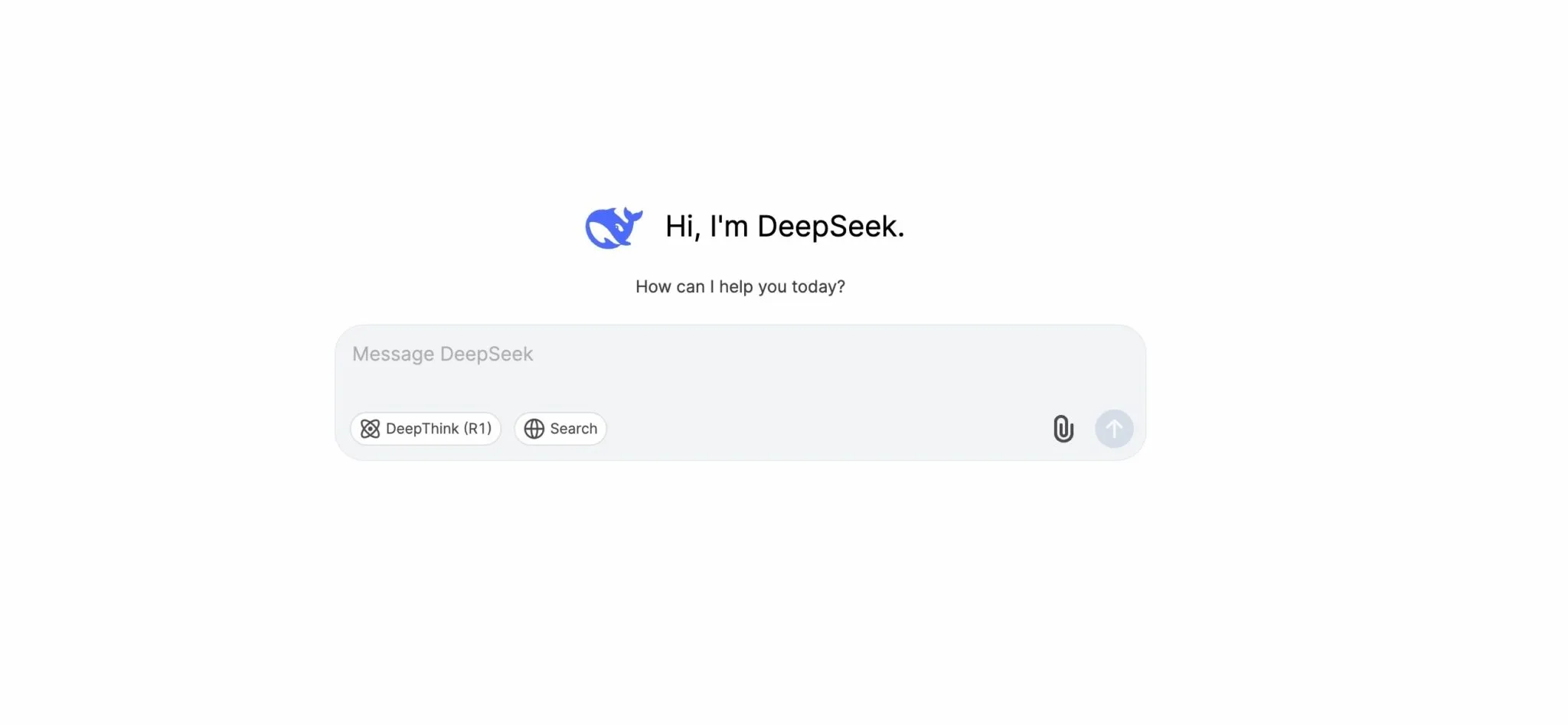
To try DeepSeek, it’s here: https://www.deepseek.com/